
TÜV SÜD supports manufacturers in achieving compliance and market access in India through its recognized testing and certification capabilities. TÜV SÜD South Asia is a BIS-recognized laboratory authorized to provide testing services for products subject to BIS requirements.
In addition, TÜV SÜD South Asia is designated under the TEC CAB Scheme, enabling support for telecommunications equipment approvals. With extensive local expertise and regulatory knowledge, TÜV SÜD provides a trusted one-stop solution for product compliance and market access in India.
Click on the categories below for market access information
Electrical Safety - Compulsory Registration Scheme (CRS)
Regulatory agency
Bureau of Indian Standards (BIS)
Regulations
-
The Compulsory Registration Scheme (CRS) covers 63 types of electronics and information technology goods.
-
The registered users should use the Standard Mark along with Registration number and IS No.

-
Any device with an integrated display screen may present the required labelling information including BIS “Standard Mark” electronically in lieu of a physical label or nameplate on the product.
Guidelines
-
A local representative is required.
CRS procedure:
-
Testing in BIS recognised laboratory.
-
Submit application to BIS.
-
Grant of registration.
Applicable product categories
Product categories requiring BIS registration include:
-
Adapters for household and similar electrical appliances
-
Amplifiers (I/P power >2000W)
-
Automated data processing machines
-
Automatic Teller Cash dispensing machines
-
Bluetooth Speakers
-
Cash registers
-
CCTV Cameras/CCTV Recorders
-
Copying machines / duplicators
-
Crystalline Silicon Terrestrial Photovoltaic (PV) modules (Si wafer based)
-
DC or AC supplied electronic control gear for LED modules
-
Digital Camera
-
Dimmers for LED products
-
Electronic clock with mains power
-
Electronic games (video)
-
Electronic music system
-
Extended Reality Products (Augmented Reality, Virtual Reality, Mixed Reality etc.)
-
Fixed general purpose LED luminaires
-
Induction Stove
-
Keyboard
-
Laptops / notebooks / tablets
-
LCD / LED / plasma TVs
-
LED Hand lamps
-
LED Lighting Chains
-
LED Luminaires for Emergency Lighting
-
LED Luminaires for Road and Street lighting
-
Lighting Chain (Rope Lights)
-
Luminaires (floodlight)
-
Mail processing / postage machines / franking machines
-
Microwave ovens
-
Mobile phones
-
Optical disc players with in-built amplifier (I/P power >200W)
-
Passport readers
-
Point of sale terminals
-
Power adaptors for audio, video & similar electronic apparatus
-
Power adaptors for IT equipment
-
Power banks for use in portable applications
-
Power converters for use in photovoltaic power system
-
Printer / plotters
-
Recessed LED Luminaries
-
Rice Cooker
-
Scanner
-
Sealed secondary cells / batteries containing alkaline or other non-acidic electrolyte for use in portable applications
-
Self - ballasted LED lamps for general lighting services
-
Set-top boxes
-
Smart card readers
-
Smart Speakers (with/without Display)
-
Smart watches
-
Standalone LED Modules for General Lighting
-
Standalone Switch Mode Power Supplies (SMPS) with output voltage 48V (max)
-
Storage battery
-
Telephone answering machines
-
Television other than Plasma/ LCD/LED TVs
-
Thin-Film Terrestrial Photovoltaic (PV) Modules (a-Si, CiGs and CdTe)
-
UPS/Inverters of rating ≤ 10kVA
-
USB driven Barcode readers, barcode scanners, Iris scanners, Optical fingerprint scanners
-
USB Type External Hard Disk Drive
-
USB Type External Solid- State Storage Devices (above 256 GB capacity)
-
Utility – Interconnected Photovoltaic inverters
-
Visual display unit, video monitors
-
Video Camera
-
Webcam (finished product)
-
Wireless Microphone
-
Wireless Headphone and Earphone
-
Wireless keyboards
To determine if a particular product is subject to the above regulations, please contact us.
Electrical Safety - ISI Certification
Regulatory agency
Bureau of Indian Standards (BIS)
Regulations
-
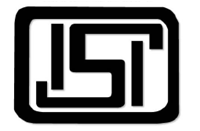
The ISI Mark, or Standard Mark, is issued by BIS under its certification scheme.
-
ISI certification* is a self-regulation scheme. The scheme itself is voluntary; however, the Government has enforced mandatory certification on various products.
-
While BIS grants licences on application, the enforcement of compulsory certification is done by the notified authorities – in this case, officers appointed by State Government/Central Government.
-
Compliance with ISO Guide 28 and 65.
* Certification procedure and submission requirements differ between foreign manufacturers and Indian importers.
Guidelines
-
A local representative is required.
Standard procedure for ISI certification:
-
Submit application with essential documents to BIS.
-
Factory inspection by BIS officer.
-
Sample picking in factory for independent testing.
-
Grant of license.
-
The simplified procedure for ISI certification** requires a submission application with test reports issued by BIS approved test laboratories.
** The simplified procedure is not granted to some items under mandatory certification and all first-time licenses for any product.
Applicable product categories
Product categories requiring ISI certification include:
-
Cables
-
Circuit breakers
-
Electric immersion water heaters
-
Electric irons
-
Electric lamps
-
Electric radiators
-
Electric stoves
-
Switches
-
Etc.
A full list of product categories may be found here.
To determine if a particular product is subject to the above regulations, please contact us.
Electrical Safety - Scheme X
Regulatory agency
Bureau of Indian Standards (BIS)
Regulations
-
BIS introduces a new scheme dated 16th March 2022, under schedule II which is named as “Scheme X”.
-
Under the Scope of “Scheme X” manufacturers will be granted the License for conformity of goods & article or Products.
-
The samples should be tested either:
• at BIS or BIS recognised laboratory, OR
• at in-house laboratory (including sub-contracted facilities) for witnessing completion by the BIS officer. -
The licence to use Standard Mark shall initially be granted for not less than three years and up to six years.
-
The Standard Mark is to be applied on the product as well as on the package.
Guidelines
Scheme-X proposes two procedures:
-
Applicant can either get their sample tested in BIS Labs/BIS Approved 3rd party lab and approved BIS for certification.
-
Witnessing of complete testing of the products intended for certification including the subcontracted facilities (if any) applied by the applicant.
Applicable product categories
Product Covered under the Scheme X: Low – Voltage switchgear and controlgear
A full list of product categories may be found at Scheme – X (Certification) - Bureau of Indian Standards (bis.gov.in)
The Machinery and Electrical Equipment covered under Omnibus Technical Regulation will be implemented from 1st Sep. 2026.
Wireless
Regulatory agency
Wireless Planning and Coordination Wing (WPC), Ministry of Communications and IT, Department of Telecommunications
Regulations
- Equipment Type Approval (ETA) through Self-Declaration for Certain Categories of Wireless Equipment in License Exempt Bands, Policy 2018-19 was inforce since Feb. 26, 2019.
- A self-declaration from importer / authorized Indian representative may be treated as sufficient evidence to process such clearances by the Customs and Central Excise Authorities.
- New Frequency Allocation is required for use of wireless equipment in a new frequency band that needs to be allocated.
- Security testing is required for WiFi CPEs and IP Router.
Guidelines
WPC:
- Application filing is done online with all the correct information, and the respective category needs to be selected.
- An Application ID is provided after online submission
- A hard copy of the application will be submitted to the WPC office
- After verify the documents and information WPC authority will grant the license
Applicable product categories
ETA is required for the import, sale, and use of wireless communication devices that operate in de-licensed frequency bands or involve radio frequency (RF) transmission.
To determine if a particular product is subject to the above regulations, please contact us.
Telecom
Regulatory agency
Telecommunication Engineering Centre (TEC), Department of Telecommunications
Regulations
- The Indian Telegraph (Amendment) Rules, 2017, provides that every telecom equipment must undergo mandatory testing and certification prior to sale, import of use in India.
- The equipment needs to be tested only in a designated CAB, or recognized CAB of MRA partner country.
-
The issued certificate shall be valid for five years from the date of issue.
- Two certification schemes are defined:
- General Certification Scheme (GCS) — an application must be supported by test reports demonstrating conformity with the ER
- Simplified Certification Scheme (SCS) — application indicates test results where necessary and includes a Supplier Declaration of Conformity (SDoC)
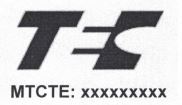
- Product should bear TEC mark on the body of equipment before sale in India, xxxxxxxxx denotes the certificate number issued by MTCTE portal (9 digit).
Guidelines
MTCTE:
- Testing against TEC Essential Requirement(ERs)
- Evaluation of test results for ensuring conformance with TEC essential requirements.
- If equipment is found complaint with all applicable TEC ERs, a certificate will be issued by TEC.
Applicable product categories
The product in the scope of METEC with ERs is here
To determine if a particular product is subject to the above regulations, please contact us.
Energy Efficiency and Environmental
Regulatory agency
Bureau of Energy Efficiency (BEE), Ministry of Power
Regulations
Energy Efficiency
-
The mandatory energy efficiency Star Label is required for certain products under the Standards & Labelling Program (S&L).
-
Requirements for each product are specified in its schedule.
-
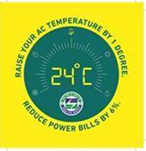
From 1st January 2020, the default setting temperature in Room Air Conditioners at 24 degrees Celsius must be present of fresh model registration applications.
RoHS
-
The Indian government has published E-Waste (Management) Rules, 2016, and it shall come into force from the 1st day of October, 2016.
Guidelines
-
Manufacturers are required to register themselves for the Standards & Labelling Program and file an e-application for the Star Label.
-
Equipment required to be labelled are listed on the BEE website.
Applicable product categories
Product categories under the mandatory energy efficiency scheme include:
-
Ceiling fans
-
Chillers
-
Color TV
-
Deep Freezers
-
Direct cool refrigerator
-
Distribution transformers
-
LED lamps
-
Light Commercial AC Fixed Speed
-
Frost-free refrigerators
-
Room Air Conditioners (Cassette, Floor Standing Tower, Ceiling, Corner AC)
-
Room air conditioner (fixed speed)
-
Room air conditioner (variable speed)
-
Stationary storage type electric water heaters
-
Tubular florescent lamps
-
Ultra-High Definition (UHD) Televisions
-
Washing Machine (Semi/Top Load/Front Load)
A full list of product categories may be found here.
QR code is mandatory to be affixed along with the Star Label for Frost Free and Direct Cool Refrigerators and LED lamps.
QR code on voluntary basis is implemented for appliances covered under Standards & Labelling (S&L) program of BEE except Frost Free and Direct Cool Refrigerators.
To determine if a particular product is subject to the above regulations, please contact us.
Plug Types
|
Type C |
Type D |
Type M |
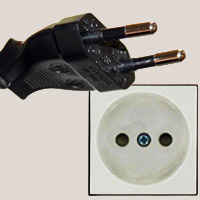 |
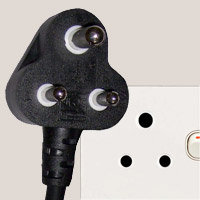 |
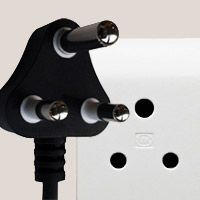 |
Why choose TÜV SÜD
TÜV SÜD has the expertise and laboratory infrastructure to support manufacturers in obtaining the necessary approvals and compliance in accordance with India's standards and requirements. TÜV SÜD test reports are accepted for safety approval and recognised by relevant authorities internationally. We also support manufacturers in obtaining voluntary endorsement labels.
Select your target market for your products
- Algeria
- Argentina
- Australia
- Azerbaijan
- Brazil
- Brunei
- Cambodia
- Canada
- Chile
- China
- Colombia
- Ecuador
- Egypt
- Eurasian Economic Union
- European Union
- Gulf Cooperation Council
- Hong Kong
- India
- Indonesia
- Israel
- Japan
- Kazakhstan
- Kenya
- Kuwait
- Malaysia
- Mexico
- Moldova
- Mongolia
- New Zealand
- Nigeria
- Sultanate of Oman
- Philippines
- Saudi Arabia
- Serbia
- Singapore
- South Africa
- South Korea
- Taiwan
- Thailand
- United Arab Emirates
- United Kingdom
- United States of America
- Uzbekistan
- Vietnam

